
When you have spare money available, deciding what to do with it can be surprisingly difficult.
Should you pay down your mortgage? Increase your pension contributions? Invest elsewhere? And if you are a business owner building wealth across several assets, when should you start thinking about trusts and succession planning?
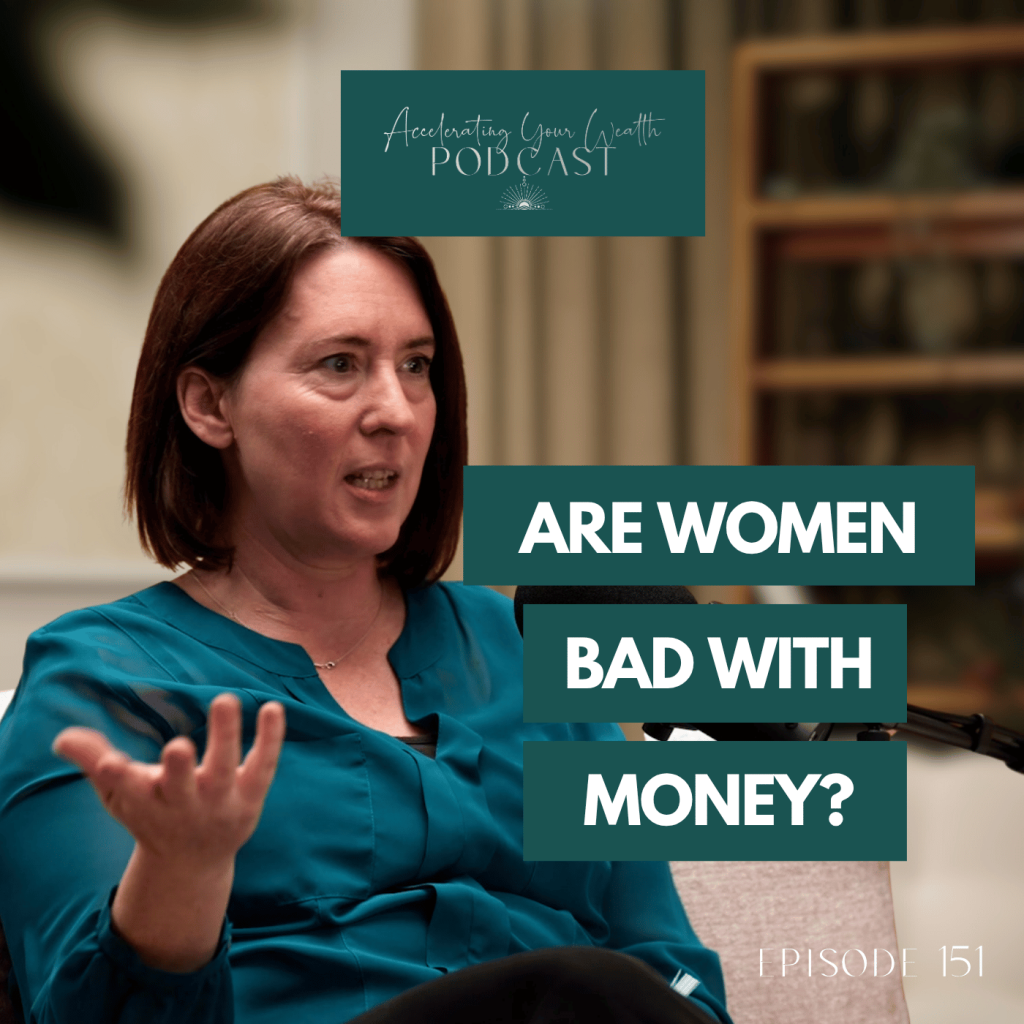
Those were among the questions tackled by independent financial adviser and wealth coach Rebecca Robertson in an episode of Accelerating Your Wealth, where she answered questions from listeners about mortgages, pensions, buy-to-let property, trusts and long-term wealth planning.
The discussion highlighted an important point: there is rarely a single financial answer that works for everyone. Your income, tax position, debts, investment plans, age and future goals all need to be considered together.
Pension or mortgage: which should come first?
One listener asked whether a high-rate taxpayer with spare cash would be better off putting the money into a pension, paying off their residential mortgage or reducing a buy-to-let mortgage.
Robertson said the answer depends heavily on the individual’s circumstances.
For higher earners, pension contributions can have significant tax advantages. Someone earning more than £100,000, for example, can start losing their personal allowance. Increasing pension contributions can potentially reduce adjusted net income and therefore restore some of that allowance.
For business owners, the position can be different again. Pension contributions made through a limited company can potentially have corporation tax implications, depending on the circumstances.
That means the decision should not simply be based on which option has the lowest interest rate.
The numbers matter
Mortgage rates, investment returns and pension growth all need to be considered.
Robertson explained that, where mortgage interest rates are relatively low, investing for the longer term can potentially produce greater growth than using all available spare cash to repay the mortgage.
But investments can fall as well as rise, and projected returns are not guaranteed.
A mortgage with a particularly high interest rate, a repayment schedule extending into retirement or monthly payments that are putting significant pressure on household finances could change the calculation.
For someone without those complications, Robertson’s approach is to consider whether their pension provision is sufficient to produce the income they want in retirement before concentrating heavily on mortgage repayment.
The key is to run the numbers rather than automatically choosing one option.
What about buy-to-let mortgages?
The calculation can become even more complicated for landlords.
Robertson pointed to the changing economics of buy-to-let, particularly for accidental landlords who may have entered the property market without a long-term investment strategy.
Mortgage costs, letting-agent fees, repairs and taxation can all reduce the income generated by a property.
For a higher-rate taxpayer, the tax position can make the situation particularly challenging.
By contrast, someone deliberately building a property portfolio may have a much clearer strategy. They may be aiming to reduce debt over time so the property ultimately produces an income, or they may plan to sell particular properties before the mortgage reaches maturity.
The important question is therefore not simply whether to pay down the mortgage.
It is what is the property supposed to achieve?
There is no one-size-fits-all answer
Robertson stressed that financial planning needs to take the whole picture into account.
That includes:
- The size and interest rate of each mortgage
- When the mortgages mature
- Current pension provision
- Income and tax position
- Existing investments
- Property assets
- Planned retirement date
- Desired retirement income
- Future financial goals
Only after those factors have been considered can someone properly assess whether spare cash is better directed towards a pension, mortgage repayment or another investment.
Trusts and protecting family wealth
The second question took the discussion into more complicated territory.
One listener asked about the strategic use of trusts for long-term wealth protection and intergenerational planning, particularly for business owners and founders with assets spread across several entities.
The question covered areas including protecting business equity and intellectual property, succession planning, future exits, providing financial security for children and protecting assets against potential future claims.
Robertson cautioned that this is an area where several different professional disciplines can overlap.
A financial adviser may deal with the financial planning aspects, but legal, tax and business considerations can require input from solicitors and accountants.
That distinction matters because trusts can be complex and the appropriate structure depends on what is being placed into the trust, who the beneficiaries are and what the person establishing it is trying to achieve.
What is the purpose of the trust?
One of the most important questions is why the trust is being created in the first place.
Trusts can be used in different circumstances, including estate planning, providing for beneficiaries and certain inheritance-tax planning strategies.
But transferring an asset into a trust is not something that should be treated as a simple administrative exercise.
In many situations, placing an asset into trust means giving up some degree of control or access to it.
That makes it essential to understand the consequences before proceeding.
Robertson also highlighted the importance of understanding exactly what type of trust is being proposed rather than relying solely on the name given to it.
Different providers and professionals can use different terminology, making it important to understand what the arrangement actually does.
Trusts in wills
Trust planning can also form part of a person’s will.
In some circumstances, a trust is created through provisions in a will and only comes into operation following death.
This can be used as part of wider family and estate planning, including arrangements designed to protect assets for beneficiaries.
There can be particular considerations where the family is concerned about future divorce, bankruptcy, debt or changes to the surviving spouse’s circumstances.
But these arrangements need careful professional advice because there can also be tax and care-fee implications.
Life insurance and trusts
Robertson also highlighted life policies as an example of a relatively straightforward area where a trust can be useful.
A life insurance policy can potentially be written into trust so that the proceeds are paid to the intended beneficiaries without having to wait for the policy proceeds to pass through the estate in the same way as other assets.
This can also have inheritance-tax planning implications.
However, the precise treatment depends on the policy, trust arrangement and individual circumstances.
Be careful about giving assets away
One of the strongest warnings from the discussion was that people should not assume transferring assets automatically solves an inheritance-tax or care-fee problem.
Giving away assets can have significant consequences.
In particular, someone needs to consider whether they may subsequently need access to the money or asset themselves.
There can also be issues around deprivation of assets where someone deliberately reduces their assets in order to avoid paying for care.
The fact that a transaction took place years earlier does not automatically mean it will have no relevance later.
That is why decisions about gifting substantial assets should be considered as part of a wider financial and legal plan.
Protect yourself before helping the next generation
For people considering intergenerational wealth planning, Robertson’s broader message was straightforward: make sure your own financial position is secure first.
It can be tempting to concentrate on passing wealth to children or grandchildren, particularly when assets have grown substantially.
But giving away too much too early can leave the person making the gift without sufficient resources for their own retirement or unexpected future costs.
Financial security therefore needs to come before sophisticated estate-planning strategies.
The bigger lesson: build a financial roadmap
Although the questions covered very different subjects, they ultimately came back to the same principle.
Whether you are deciding between a pension and mortgage repayment or considering a trust for family wealth, the answer depends on the wider financial picture.
A financial plan should consider where you are now, where you want to be and what needs to happen between the two.
That could mean increasing pension contributions, reducing expensive debt, reviewing property investments, protecting income or beginning succession planning.
The important thing is not to make individual financial decisions in isolation.
Instead, understand how each decision affects the rest of your finances.
As Robertson emphasised during the episode, a one-size-fits-all answer does not really apply to complex financial decisions.
The right strategy is the one that fits your circumstances, your tax position, your assets and, ultimately, what you want your money to achieve
Rebecca Robertson in the Accelerating Your Wealth podcast.