
Ask Becky Anything often brings in questions from women navigating some of the most stressful financial moments of their lives. Divorce, depleted savings, uncertainty about the future, and the pressure to make the “right” financial decisions can feel overwhelming. In this episode, Becky tackles two powerful questions about pensions, both rooted in fear, practicality and the desire for reassurance.
The first comes from a woman aged fifty‑eight, going through divorce after a thirty‑five‑year relationship. Her savings are gone, her financial settlement is still pending, and she is wondering whether to start drawing her pension now or hold off until sixty. The second comes from a business owner who feels she cannot contribute as much to her pension as she would like and wants to know how to stay confident about her long‑term financial future.
Both questions reveal the same truth: pensions are emotional. They represent security, independence and the future we hope to have. And when life becomes uncertain, they become even more important.
Should You Draw Your Pension Early During Divorce?
Becky begins by addressing the heart of the question: what actually happens when you draw your pension early? The simplest explanation is that the money can run out faster. Whether you take the tax‑free lump sum or begin drawing taxable income, the pot reduces more quickly and has less time to grow.
The right decision depends entirely on the size of the pension pot and the lifestyle you need to maintain. Becky explains that someone with a pot of around two hundred thousand pounds who lives very simply might manage to draw five or six hundred pounds a month. It is not enough to live on, but once the state pension begins at sixty‑seven or sixty‑eight, the combined income may reach fifteen or sixteen hundred pounds a month. Even then, Becky notes that most people’s basic outgoings today sit closer to two to two and a half thousand pounds a month, even without mortgages, car finance or children.
This is why drawing too early can create long‑term strain. Some people may need to consider equity release if their home is their main asset. Others may need to work part‑time for longer to subsidise their pension until it reaches a sustainable level for those with larger pots — three hundred thousand, four hundred thousand, or over half a million — the picture changes. A bigger pot can sustain higher withdrawals without collapsing too quickly, especially if the lifestyle expectations are moderate.
Becky shares an example from a recent client case. In their situation, it was better not to take the twenty‑five per cent tax‑free lump sum immediately. Leaving the money invested meant it continued to grow tax‑free, and only the taxable portion of withdrawals would incur tax. By delaying drawdown, the pot had more time to compound, allowing both partners to retire comfortably at sixty‑five with a pension that would last far beyond their expectations. Becky even encouraged them to draw more of the tax‑free portion before age seventy‑five to maximise the benefit.
The takeaway is clear. There is no universal rule. It depends entirely on your pot size, your lifestyle, your age and your long‑term needs. It is a numbers‑based decision, not an emotional one, even though the emotions surrounding it are very real.
If you want to explore how pension drawdown works, you can dive deeper into pension planning or explore retirement income options.
What If You Can’t Afford to Put Much Into Your Pension?
The second question comes from Jane Atherton, who runs a leadership consultancy and feels she cannot contribute as much to her pension as she would like. Becky explains that many business owners feel pressured when they hear that the annual pension allowance is 60,000 pounds. It sounds aspirational, but unrealistic.
Becky reframes the situation by comparing it to employment. If Jane were earning fifty, sixty or seventy thousand pounds in a salaried role, her employer would likely contribute between six and twelve per cent into her pension. If she added a personal contribution of around five per cent, she would be contributing roughly what most employed people contribute.
This becomes a helpful benchmark. If you are in your forties, contributing the equivalent of what you would have contributed as an employee is a strong and sustainable approach. If you are in your fifties, you may need to increase contributions slightly, but you do not need to reach the full sixty thousand allowance to be on track.
Becky also highlights that many business owners view their business as an asset that may be sold in the future. If that is part of your long‑term plan, it is essential to build the business in a way that makes it genuinely sellable. A future sale can become an additional source of retirement income alongside your pension.
Cash flow challenges are common for business owners. You may have proposals out, projects delivered but not yet paid, or seasonal fluctuations. Becky emphasises the importance of consistency. Even if you cannot contribute thousands each month, contributing regularly — even smaller amounts — builds long‑term stability.
She encourages business owners to use forecasting tools, either with a financial adviser or through government websites. These tools allow you to input your current pot and contributions to see what your future income might look like. This builds reassurance and helps you stay focused on consistency rather than perfection.
If you want to explore contribution strategies, you can look at how much to put in your pension or explore business‑owner retirement planning.
The Real Message Behind Both Questions
Both women are facing different challenges, but the underlying theme is the same. Pension decisions feel heavy because they are tied to security, identity and the future. Becky’s guidance is grounded in realism, compassion and clarity. There is no one‑size‑fits‑all answer. There is only what works for your numbers, your lifestyle and your long‑term goals.
Whether you are navigating divorce, running a business, or simply trying to make the right financial decisions, the most important step is to understand your options clearly. From there, you can make choices that support your future rather than limit it.
If you want to explore your own pension questions, you can ask about pension drawdown or explore retirement forecasting.
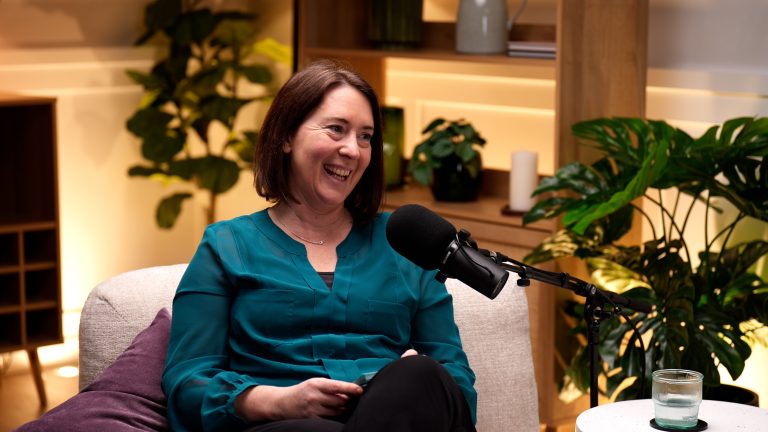
Rebecca Robertson in the Accelerating Your Wealth podcast.