
Ask Becky Anything is becoming a favourite space for listeners to send in the financial questions they’ve been sitting on for months, sometimes years. These questions often come from people who are already financially savvy, saving, and planning, but still feel unsure about the best next step. And that’s exactly where this episode begins.
Sherry Bevan, a long‑standing business owner preparing for retirement with her husband, asks whether she should start drawing down her pension now and move the money into an ISA. It’s a suggestion she heard from someone else, and like many people, she wants to know whether it’s genuinely a good idea or simply one of those “my friend said I should do this” moments that can lead people down the wrong path.
Becky’s answer is clear, detailed and rooted in the reality of how pensions and ISAs actually work.
Should You Draw Down Your Pension Early and Move It Into an ISA?
Becky begins by explaining that this kind of question is exactly why understanding the difference between guidance and advice matters. On the podcast, she can only give guidance because she doesn’t know the listener’s full financial picture. But she can explain the mechanics, the implications and the logic behind the decision.
The first thing she highlights is the ISA allowance. Each person can only put twenty thousand pounds a year into an ISA. If someone takes a large tax‑free lump sum from their pension, such as one hundred thousand pounds, only a portion of that can be sheltered inside an ISA each year. The rest either sits in cash or goes into a general investment account, which does not have the same tax advantages.
This is where the comparison becomes important. Money in a pension grows tax-free. The growth is sheltered. You only pay tax when you withdraw the taxable portion. Money inside an ISA also grows without tax, but the amount you can place inside an ISA is capped annually. A general investment account, on the other hand, is exposed to capital gains tax and income tax depending on how the investments perform.
So while it may sound like a simple “move it from one tax‑free wrapper to another,” it isn’t. The pension is a more powerful tax‑efficient environment, especially for larger sums.
Becky also explains the upcoming rule changes arriving in April 2027. These changes affect how pensions are treated on death, particularly around inheritance tax and the tax position of the person inheriting the pension. Because of this, many people will want to use their tax‑free pension allowance before age seventy‑five, but that doesn’t mean they should empty the pot early or move it into an ISA unnecessarily.
She emphasises that unless there is a specific purpose for withdrawing the money, or a strategic reason linked to personal circumstances, moving pension money into an ISA simply because someone suggested it is rarely the best approach. The pension is usually the stronger tax‑efficient home for long‑term growth.
If you want to explore this topic further, you can dive into pension vs ISA strategy or explore tax‑free lump sum planning.
When Should You Bring a Financial Adviser Into the Divorce Process?
The second question in this episode comes from someone navigating divorce and wondering when the right time is to involve a financial adviser. Divorce is rarely linear. It is emotional, administrative, legal and financial all at once. And because financial disclosure often comes late in the process, many people feel stuck between wanting clarity and not having enough information to make decisions.
Becky explains that this is a chicken‑and‑egg situation. A financial adviser cannot give legal advice, and a solicitor cannot give regulated financial advice. Both roles overlap in guidance but not in responsibility. And until full financial disclosure is complete, it is difficult for an adviser to model scenarios or forecast outcomes.
Once disclosure is available, the picture changes. At that point, an adviser can help with scenario planning, mortgage capacity assessments, retirement modelling, affordability checks and long‑term projections. This helps clients understand what different settlement options might mean for their future.
Becky shares examples of clients who have gone back and forth between their solicitor and financial adviser over several months. As new information emerges, the scenarios change. Sometimes the family home may be sold. Sometimes one partner may buy out the other. Sometimes maintenance may be involved. Sometimes childcare responsibilities affect earning capacity. All of these factors influence the financial plan.
She also highlights the emotional reality. Many women stay in relationships longer than they want to because they feel unable to navigate the financial side of divorce. This is why financial independence and financial awareness matter long before a relationship ends. Understanding your household finances is not just practical — it is protective.
If you want to explore this further, you can look at financial planning during divorce or explore how to prepare for financial disclosure.
The Real Message Behind Both Questions
Whether you are preparing for retirement or navigating divorce, the theme is the same. Financial decisions feel overwhelming when you don’t have the full picture. Becky’s guidance is designed to help people understand the mechanics, implications, and logic behind their choices so they can make informed rather than reactive decisions.
Pensions, ISAs, divorce settlements and retirement planning are deeply personal. There is no one‑size‑fits‑all answer. But clarity is available when you know what questions to ask and understand the difference between guidance and advice.
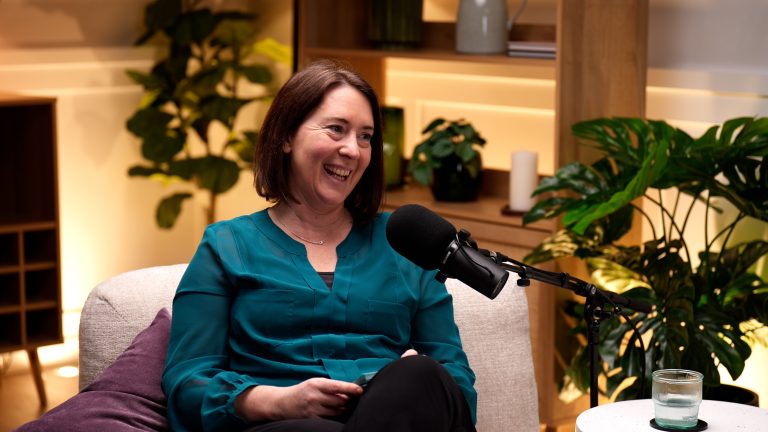
Rebecca Robertson in the Accelerating Your Wealth podcast.